
13 Leaves
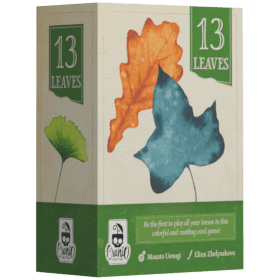 Geniet van het gebladerte, ontdek alle kleuren en vormen die de natuur te bieden heeft en creëer een mooie en bevredigende rangschikking!
In 13 Leaves kunnen spelers een of meer kaarten met dezelfde waarde spelen die aansluiten bij de reeks op tafel. De kaarten moeten een waarde hebben die gelijk is aan of lager is dan de laagste kaart in de reeks, of een waarde die gelijk is aan of hoger is dan de hoogste kaart in de reeks.
Het spel bestaat uit verschillende rondes. Elke ronde is verdeeld in beurten die met de klok mee verlopen. Als de actieve speler aan de beurt is, speelt hij, als hij dat kan en wil, een of meer kaarten met dezelfde waarde uit zijn hand. Meerdere kaarten met dezelfde waarde worden op elkaar gestapeld om te laten zien hoeveel kaarten met die waarde er op tafel liggen. Kaarten met verschillende waarden worden in numerieke volgorde op tafel gelegd en vormen zo een reeks.
De eerste speler die alle kaarten uit zijn hand heeft gespeeld, wint.
Geniet van het gebladerte, ontdek alle kleuren en vormen die de natuur te bieden heeft en creëer een mooie en bevredigende rangschikking!
In 13 Leaves kunnen spelers een of meer kaarten met dezelfde waarde spelen die aansluiten bij de reeks op tafel. De kaarten moeten een waarde hebben die gelijk is aan of lager is dan de laagste kaart in de reeks, of een waarde die gelijk is aan of hoger is dan de hoogste kaart in de reeks.
Het spel bestaat uit verschillende rondes. Elke ronde is verdeeld in beurten die met de klok mee verlopen. Als de actieve speler aan de beurt is, speelt hij, als hij dat kan en wil, een of meer kaarten met dezelfde waarde uit zijn hand. Meerdere kaarten met dezelfde waarde worden op elkaar gestapeld om te laten zien hoeveel kaarten met die waarde er op tafel liggen. Kaarten met verschillende waarden worden in numerieke volgorde op tafel gelegd en vormen zo een reeks.
De eerste speler die alle kaarten uit zijn hand heeft gespeeld, wint.
Aantal spelers: 3 - 6
Spelduur: 10 mn
Complexiteit: 0 / 5
Speel 13 Leaves en 1403 andere spellen online.
Geen download nodig - speel rechtstreeks in je webbrowser.
Met je vrienden en duizenden spelers van over de hele wereld.
Gratis.


Speel 13 Leaves en 1403 andere spellen online.
Geen download nodig - speel rechtstreeks in je webbrowser.
Met je vrienden en duizenden spelers van over de hele wereld.
Gratis.
Samenvatting van de regels
Game Overview
In a game of 13 Leaves, the first player to finish all the cards in their hand wins.
How to Play
The game consists of several rounds. Each round is divided into turns that proceed clockwise. On their turn, the active player, if they can and if they want, plays one or more cards of the same value from their hand.
Multiple cards of the same value are stacked on top of each other to show how many cards of that value are present on the table. Cards of different values are placed in numerical order, forming a sequence on the table.
Cards you can play
The first player can play as many cards as they want of the same value.
Subsequent players must play cards of the same value, following these rules:
Cards with a lower or higher value
Players can add cards of any value lower than the lowest card on the table or any value higher than the highest card. Played cards are placed to the left or right of the sequence on the table.
Cards equal to the extremes
Players can play cards that match the value of one of the last played cards on each end of the current sequence on the table. Played cards are stacked on those already present of the same value.
The minimum number of cards
Players must play a number of cards equal to or greater than the number of cards at the end of the sequence they are playing on (whether playing a lower/higher value or the same value as one of the ends).
Intermediate values
Players cannot play cards of any value between the two ends of the sequence on the table.
Passing the turn
If you cannot or do not want to play, you must pass. When you pass:
- Take one card of your choice from those visible on the table and add it to your hand. Note: This is an important choice: the card you take could be useful in the next round, but if you take a card from the ends of the sequence, you might help your opponents still playing in the current round.
- Turn your hand of cards face down. You are out of the current round and cannot play until the next round.
End of the round
The round ends when all players but one have passed.
The last player who has not passed removes all cards face up on the table and becomes the first player of the new round. Like at the beginning of the game, they can play any cards they want and start a new sequence on the table.
End of the game
The game ends immediately when one player finishes the cards in their hand.
Expert Variant
This variant is designed for those who want to play a bit longer and adds a scoring system at the end of each game.
How to Play
Play a first game as explained above.
At the end of the game, the player who finished their cards in hand scores 0 points, while all other players score 1 point for each card they still have in hand (regardless of the card’s value). Record your score and play another game, starting from the setup.
End of the game
The game ends when one or more players reach 20 points or more. The player with the lowest score wins the game.